Thursday, August 28, 2008
"Yacht Rock" at the Rickshaw Stop
A live event honoring a youtube series ("web TV" is naive and faintly rude, like calling a comic book a "Graphic Novel" or referring to a beatnik as a "white negro") gives the strangest kind of evening. The overall emotion is somewhere between seeing a Night Ranger reunion concert and witnessing the arrival of Dennis Quaid's palooka has-been baseball coach finally getting to play in the major leagues at the end of "The Rookie." Notice that neither event is particularly glorious - Quaid's playing for the Devil Rays, and unless they play "Sister Christian" on repeat for two hours the concert's 99 percent filler - but both have the low-rent appearance of actual glory. Layer in a dollop of considerable retro-post-irony - the double-back ability to appreciate a thing for its awfulness while loving it for its awesomeness - and you've got the special Yacht Rock screening at the Rickshaw Stop.

Tuesday, August 19, 2008
The Ineluctable Accrual of Time and Fantastical Experience: A Meditation on the Hills of Mulgore
I have no idea why I signed up for a 10-day trial for World of Warcraft on Friday. I would like to say that I was bored, but the truth is I'm bored all the time at my job, and I usually manage to coax my boredom (or perhaps harness it) by writing (a long email to friends and family), or reading (a novel, or the newest Taibbi), or sometimes even addicting(games.) Maybe it was because I'd had such a good work week - a great forward leap in all my many schemes had taken place. So, in much the same way that I feel good about eating sloppy and drinking nasty after a full week of Whole Foods and 24 Hour Fitness, so perhaps, after a week of such peak efficiency, I saw no reason not to delve into that wide world of personal inefficiency, video games.
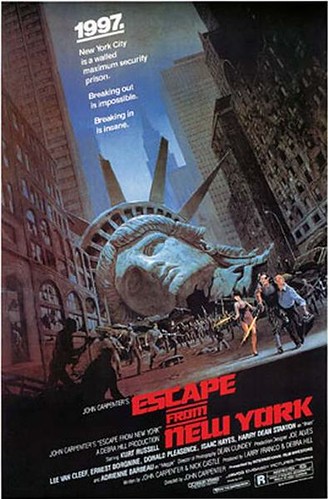
Or maybe it was because I visited home last week - briefly. About a year ago, I put away my Playstation 2 and all my video games into a box, and that box was put into our new storage shack out back, which looks a little bit like a gigantic dollhouse, and so full of dust. But I was home, and I was bored, and I realized that I had never beaten the last level of "Kingdom Hearts." Like an addict discovering an unspent hypo, or perhaps more happily like a retired badman coming out of retirement for one last score, I put the fragile CD game (how long can those things last? Are they like fairies, dying away when no one's left to believe in them?) into the even more fragile PS2 (those things used to look so new and chic; now, they look like the wreckage of Manhattan in the background of the "Escape from New York" poster.)
Hooked again, I barely managed to stop myself at 2 in the morning from quitting right before an apt-to-be-hours-long final battle began. But the feeling stuck around. I don't know what that feeling is - I'm talking about why it's so fun to play video games in general, but why it's especially fun to play a gigantic fantasy game, with the bizarre set of reality-dominating rules, the steady build-up of yourself and your abilities and your outfit, and the inevitably horde of dragons.
But maybe that was going through my head, on Friday, when I pulled my desk against the wall and darkened my screen so that no passersby could see when I entered in my screen name and password.
Here's the thing: Warcraft works in a way that's somewhat different from any other game I've ever played. I'm not talking about what's specifically happening, since almost all of the specifics fade from memory almost immediately unless you're a complete mouthbreather, and even mouthbreathers who play Warcraft aren't usually monobrained enough to actually care if you kill Ramshackle Stirling of the attacking Beetlebum Castratos who reside in Tweedlepork Canyon or whoever the fuck was the chief of that tribe of weird man-beasts I killed in hour 4 of my great experiment.
No, the reason Warcraft works - at least at first, and I think also over time - is the steady accrual of spectacle and experience. When you begin, you're in a tiny little village - 4 or 5 little huts. You get sent out to fight annoying little birds and fearsome coyote things. After a little while, you kill enough coyote things to buy a new weapon. You think, "This weapon is the coolest fucking weapon ever." Using that weapon, you go after a new target: humanoid things. Along the way, you run into those birds and coyote things, and you kill them so much easier now, you can't believe they were ever a problem. The humanoid things are harder to kill, though: maybe, at one point, you get attacked by two at a time. You manage to kill them, though. Your village elder tells you: it's time to go to the next village.
You think: Well, what the hell, I get it. But the next village is bigger, and the enemies are fiercer, and slowly, you begin to get a sense for the deeper story. I'm a Minotaur-looking creature residing in a valley of Minotaur creatures - that's just about the whole world that I know now. But the whole valley keeps being attacked from all sides - dwarves to the west, goblins to the east, and I think I ran into a couple of centaurs at one point, appearing in my tiny little world like monstrous giants in Lilliput.
I can remember a similar kind of feeling in one of my favorite games ever, Final Fantasy VII. Early in the game, although for me it was many weeks in, you come upon this gigantic moat. Inside the moat, you can see a gigantic shape moving around. You go into the moat, and the shape comes towards you. You go into battle mode, and you're facing off against the largest creature you've ever seen - a gigantic sea serpent. If you're lucky, it kills your whole party in one move; if you're not lucky, you have long enough to get one hit in, which barely dents him.
Here's the thing: much later in the game, when your party has swelled, when you've gone through any number of new weapons and armor, when you've basically crisscrossed the world seven times and gone to hell and back, you may find yourself back at that little moat. And you step in there, and the shape comes towards you. And there you are again, facing the gigantic sea serpent. And if you strike first, no shit, you kill it completely. In one. And if it strikes first, it barely even dents you. The master become the pupil. The serpent become a lamb.
Here's another picture of my boy:

Sunday, August 17, 2008


Thursday, August 7, 2008


Wednesday, August 6, 2008

Wednesday, July 30, 2008
"The X-Files" and "The Train"
It's not fair to say that the new X-Files movie (variously described as a sequel to the first movie, a bigscreen adaptation of the TV show, and the hopeful beginning for a new franchise) is bad, because that's missing the point. It's actually the worst movie of the year, but more than that - it's one of the worst movies of any year, and joyfully so.
Follow here: the TV show ended with Mulder and Scully on the run from the FBI and the aliens and perhaps also the Flukeman. The movie begins with Scully working in a hospital run by Catholics, treating a boy named Christian for an incurable disease. Mulder has been hiding out in a house in the middle of nowhere, cutting out newspaper articles which hint at the fantastical events, and pinning them on the walls, ceiling, and floor of his study. He may be investigating these mysterious events, but that's left vague. He's called back to work for the FBI by a special agent played by Amanda Peet, an actress who's been nearly famous for almost a decade now. (Her partner is played by Xzibit, who shouldn't even keep his day job.)
The reason that he's called back - the reason why the FBI is willing to pardon him for crimes which are left vague in the movie, partially so franchise newcomers won't be confused, but also because those crimes were vague to begin with - is that one of their agents has been abducted in Virginia, and a local man claims to be having visions of said woman. That's it: some guy in Virginia says he's a telepath, and the FBI has no one to turn to but Fox Mulder. Movie, Go!
I should point out that said telepath is a former Catholic priest who's also a convicted pedophile. This is potentially interesting, but the movie obscures his crime behind a PG-13 veil of moral indignation and murky plotting. Everything about the movie is vague. In the middle of the movie, Scully and Mulder are lying in bed together - are they sleeping together, or living together, or what? Their relationship used to be predicated on will-they-or-won't-they; now, it's more like are-they-or-aren't-they, which would be an interesting tone if the creators even realized it existed.
Nothing about this fucking movie makes even shitty sense. People appear randomly in countryside that might be Virginia, in a city that might be Washington DC, and in other settings which all look like Canada. I'm not downing the fact that they shot in Vancouver - in fact, everything that's memorable with the movie has to do with the exteriors, with people walking and driving through gigantic snow drifts. You begin to wonder what could be buried under the snow, and what it might dig up.
The problem is that everything ABOUT this movie is snow. After 90 minutes, I still don't really know much more than I knew from watching the trailer. There's a character who's obviously the villain, because he's played by Leoben from "Battlestar Galactica" and is the kind of guy who hangs around pools and grins at pretty girls while holding his breath under water. Because this is "The X-Files," you're waiting to find out something cool about this guy - is he a ghost? A merman? A werewolf? A Wendigo? None of the above - not even close. The reveal is so anticlimactic as to make you doubt whether this movie actually happened.
How can I put this? No one involved in this movie understands how to write a screenplay or how to film a movie - yet, even worse, no one seems to understand what made "The X-Files" such a great show. There's not one single moment in the entire movie which comes close to capturing the magic of an episode from the show's boom years. There is a strange and utterly non sequitur moment early in the film - Mulder and Scully are back in the FBI Headquarters, and while they stand in the hallway, they notice a picture of George W. Bush. The camera lingers on him, and the theme music - not even the theme music, just the little whistle - sounds on the soundtrack. The camera moves right, and lingers on another picture - that of J. Edgar Hoover.
It's a silly moment - so ambiguous that it's not really offensive to anyone - but it reminds you that the "X-Files" was, above all, a funny show, built less on the two leads' eventual romance than on their simple exasperation with each other. Neither of them were really noble - Mulder was a closet psycho more concerned with proving aliens exist than saving people from them, and Scully was officially trying to get Mulder fired and unofficially trying to talk some sense into him. The movie buys Mulder's argument hook, line, and sinker. It's right there in the title: "I Want To Believe." That's not the theme - that's the whole entire thesis.
Belief is an interesting idea, but the way that the movie plays it is farcical. Part of belief - particularly Christian belief, and particularly Catholic belief, and this movie is so Catholic you'd think the Reformation never happened - comes from faith in something that can't be proved - "Blessed are they who believe and have not seen," the Messiah told Doubting Thomas. Well, in this movie, some random guy manages to track down bodies and limbs buried in the middle of the Virginia/Vancouver Icecap using nothing but vibes; he also cries blood, and does a few other things outside the ken of reality, also. What's not to believe in? The show was mysterious; the movie is just purposefully undefined, and by the end you're demanding a huge twist just as an explanation for why nothing makes any sense.
I was thinking about this awful movie while I watched a movie from the 1960s, "The Train," a trim little actioner by John Frankenheimer which has the distinction (according to Frankenheimer, at least) of being the last action movie filmed in Black and White. (I'm not counting "Sin City," because a) it had color, and b) I remain unconvinced that it's not just a fancy star-ridden screensaver.) "The Train" is not great. It's set towards the end of World War II, and features characters who are French and German, but everyone speaks English, especially Burt Lancaster, who doesn't even bother to affect a French accent in his leading role. The film moves slowly and deliberately - it takes awhile for the central plot to kick in, and even then, you're not totally convinced that you're not watching a B-grade heist movie with a semi-serious theme (towards the middle of the movie, one character even says, "This is the last job.")
Yet "The Train" is a movie - you get absorbed by the shots even when you're watching it on a TV screen, whereas most of the shots in "The X-Files" movie are so dull and rote and chopped together as to make you stare directly the ceiling of the movie theater. There's a weird magic to the way that Frankenheimer shoots actors - it's the black and white, it's the wide angle lenses with deep focus backgrounds, but it's also how effectively he hints at the turbulent emotions going on behind their brows.
Frankenheimer had one of the strangest careers in Hollywood history, but for about two decades there, he was making eye-popping little films with bigtime stars who were neverbetter. Frank Sinatra in "The Manchurian Candidate," Lancaster here, Rock Hudson in "Seconds," Gene Hackman in "French Connection II" - all of these roles are, in one way or another, about men trying to figure themselves out. Sinatra is brainwashed; Rock Hudson is an old man in a young man's body; Hackman is a celebrity cop who turns into a junkie; and, most subtly yet perhaps most effectively, Lancaster in "The Train" is a man who's just trying to do his awful, awful job, and somehow that job turns him into a hero.
Here's the setup - the Nazis are leaving Paris, and one Colonel wants to take the great art of France with him on the titular Train. The opening credits sequence sets the tone perfectly - soldiers arranging boxes with names like "Miro," "Picasso," "Dali," "Renoir," etc. The stakes are simple - that art is the glory of France, and it can't be taken. Not to worry - you don't have to like art to enjoy this movie, since Lancaster, as the rebel leader, definitely doesn't. (He regularly suggests blowing the train up.) The movie wanders around in its opening hour - the Nazis are trying to leave Paris, and Lancaster, as the railway inspector, is trying to delay them long enough so that the Allies can come in and bomb them all to hell.
More things happen - I don't want to go into detail, not because the movie is particularly twisty, but because the tiny aspects of plot are so essential to how this movie becomes what it becomes. More or less just by not being blown up earlier, the train with the art onboard becomes a strange kind of MacGuffin - nobody who's protecting it particularly wants to protect it, and everyone who tries to ends up dead. The person who most appreciates the art is the Nazi Colonel who's willing to kill everyone - even his own men - to keep the art for Germany.
The movie flows along organically, partially because, at the beginning, no one's role is particularly clear. Whereas all of the characters in "The X-Files" feel like mouthpieces for a particular theme, here the characters are normal people in doubly fantastic times - because of the War, which is actually getting worse the closer it gets to the end, and because of the Train, which supposedly holds the glory of France. ("Have you ever seen the paintings?" Lancaster's friend asks him, right before they go off to sacrifice themselves yet again. "When we're finished, I think we should take a look.")
The last twenty minutes of "The Train" are some of the most tense of any movie. And yet, they're desperately slow. Lancaster is hobbling - he's been shot in the movie, and in real life he suffered a knee injury while playing golf. The tension is unbearable. At the end of "The X-Files," Mulder is also hobbling from an injury or two, but I think there's one main difference. In "The Train," we see exactly where Lancaster is - he's climbing over a hillside, and there's a shot that's so wide that you have to watch it two or three times before you notice the tiny little moving Lancaster dot. We can feel every step, because we're there for every step, or at least it feels like it. In "the X-Files,' Mulder emerges from a wreck and then starts runwalking. We cut, and he's somewhere else, doing some more runwalking. At one point, he's attacked by dogs, but the film cuts away from him just as the dogs attack. We cut to inside the evil secret lair, where people hear dogs barking and run outside. There, they find a dog which appears to have two heads, and one of the heads is dead.
It's an intriguing image, but why don't we get to see Mulder fighting the dog? Well, because Mulder needs to magically appear inside at that very moment. Surprise! Christopher Nolan is good at this sort of thing, but he's the exception - and since his characters almost always have secret identities, perhaps he's the exception that proves the rule.
What I'm saying is that there's hardly any magic in any single shot of "The X-Files," and "The Train" is full of magic. Why is that? Why is it that an old slow movie with hardly any memorable characters somehow, in its final moments, turns into one of the greatest standoffs in movie history? Why is it that such a movie can be much more fine-tuned than a movie whose creators have had more than a decade to finesse the character dynamic, to figure out what stories work and what stories wouldn't?
In "The Train," characters rarely talk about anything but how much they want to survive, and the movie somehow feels filled with ideas. In "the X-Files," characters rarely talk about anything but ideas, and the movie somehow feels emptied of everything. Why is that?
Sunday, July 20, 2008
"The Dark Knight"
The Dark Knight solves crime. The Dark Knight cures diseases. The Dark Knight prevents sunburn. The Dark Knight investigates Abu Ghraib. The Dark Knight turns bad mofo Staten Island men into geeksturbating incoherent sad-happy undevirginized men. The Dark Knight creates the sun, the moon, and the stars, Encolpio. The Dark Knight was one opening night, on IMAX, in capital letters, for two and a half hours, playing at six AM, for the first time ever, in CAPITAL LETTERS, because you can't say it enough. The Dark Knight fights fascism. The Dark Knight is what you talk about when you're around people you don't know and you need to talk about something. The Dark Knight makes you attractive. The Dark Knight works wonders. Wonders beyond our human ken. The Dark Knight is Christian Bale. He has three voices in the movie. One is a loud whisper, which he uses when he's wearing the mask, except for one little moment, which you only notice when you see it the second time (and yes, you have to see it the second time.) One is the douchebag billionaire voice, which when he uses you remember that he is a british fellow talking American, but it's okay, because every syllable the man named Bruce Wayne uses is so practiced (because every moment he lives he is imagining himself as someone else [because he, a character conceived by two people about 70 years ago, when his name had a hyphen, and the Great Depression was, you know, happening, just so happen to be the very image of a modern man)]. One, the final one, is the voice he uses when he is speaking to someone who knows that both of the above voices are fake - his butler Alfred, usually, and occasionally his galpal Rachel, who is his affair of the heart, who was played by Katie Holmes and is now and forever played by Maggie Gyllenhall, who is too good for this movie (her role is an awful, awfully noticeable downer in this great movie about men trying to do good and thus[ly] betraying everyone they tell themselves they love.) This is the greatest performance Christian Bale has ever had - impressive, when you consider that he also blew your mind in the preview for the new "Terminator" that played before this audio visual global event, and that he was competing with the image of Dr. Manhattan in the trailer for "Watchmen," which, unless that movie is capable of defeating this one in being the greatest ever, will be fundamentally disappointing (because the "Watchmen" trailer is, for some of us, the greatest not-the-actual-thing thing, ever, in all history, of humankind, ever.) And even more impressive, when you consider that Batman is the fifth or sixth lead in "The Dark Knight," which (we all didn't notice until we saw the movie) is a film with "Batman" not even remotely in its title.
Yes, this is a movie about Harvey Dent - played awfully by Tommy Lee Jones, and briefly by Billy Fucking Dee Williams, and now perfectly wonderfully endlessly by Aaron Eckhart - who says his own epitaph (which actually happens often in bad movies but here happens quitely in the greatest movie), "You either die a hero, or live long enough to become a villain." And it's also about Morgan Freeman, in a real role ("The Dark Knight" helps us all understand that "Wanted" is dogshit.) But wait, you're forgetting Gary Oldman, who frankly make you cry, with happiness, again, and again. And again. He's so good that you could call the movie Jim Gordon, and it would be the greatest crime sequel since French Connection II. Which it is. Except erase sequel, and crime, and underline greatest, in bold, with gold.
The Dark Knight opens up China to the west. (True.) The Dark Knight has a brief yet immortal scene in Hong Kong. The Dark Knight involves a Hong Kong controversy. Tangentially. Abstractly. It's conversation worthy. Every line in this movie is conversation worthy. There will be discussions about cadence. There will be agonizations over missed chances for The Sequel. (Spoiler alert - the Joker does not die. Spoiler alert - he will live forever.) "There Will be Blood" - and by the way, this movie is utterly that movie with superheroes. What I mean is that you feel the same way watching it. Horrified. Yet laughing, endlessly, horribly (because you're laughing at Armageddon), splendidly (because you laugh about the same jokes twice and thrice and whatever word rhymes with those two that means a billion million), and wonderfully (because this movie makes you believe in movies, and comic books films, and life after death, and fiction.)
The Dark Knight makes critics write the greatest reviews of their lifetimes. Go here. Read this. Read it out loud. Read it on the street. Read it until you memorize every word. Why haven't you seen it? What is going on in your unfortunate head? Why aren't you and I talking about The Dark Knight right now, together, you quoting your favorite line and me quoting mine (no doubt initially being words spoken by Heath Ledger, who is amazing, who is not dead, because he lives on, today, in theaters, not just everywhere but more everywhere than ever before.)
This movie solves problems. This movie examines modernity. This movie recreates situations recognizable from unenjoyable new broadcasts. This movie features news broadcasts. This movie involves Anthony Michael Hall, and Cillian Murphy, and the guy who played Zeus in "Friday." If I tell you he gives the best performance in the whole film, will you believe me? What if I tell you that he's only onscreen for maybe three minutes? And what if I tell you that that means that the same guy who played Prisoner #2 in the third Austin Powers and who voiced a role in that fucking 50 Cent shitfest game has now given the greatest role in the greatest film ever made?
The Dark Knight is it. The Dark Knight makes you cry. The Dark Knight makes you laugh. But only at dirty bad things. The Dark Knight ends perfectly. It does lots of other things perfectly, too. It can't help it. It's the greatest movie ever. Made. Conceived. Performed. Filmed. Edited. Scored (you will love the violins [I insist.]) Released. The Dark Knight is its own industry. The Dark Knight is its own country. The Dark Knight is itself. It's wonderful. It's memorable. It's a sequel. It's the "Chinatown" of superhero movies. It's the "Chinatown" of this decade. It's "Chinatown" with a Bat-cycle. It's "Chinatown." Forget it, Jake, this is Gotham City. Every movie that came before can't compare. Every movie that comes after will try to. They will all fail, and miserably. Because this is it. You can tell. Because you see it twice, and still want to see it. Again. Again. Again. Please.
Subscribe to:
Posts (Atom)